Turkish English Translation for Artists and Exhibitions
- October 02, 2023· Article by David Brown
- ART , turkish english translation
Turkish art stretches from Ottoman calligraphy and Iznik tiles to marbled paper, miniature painting, contemporary installations and the busy galleries of Istanbul, Izmir and Ankara. Artists, curators and collectors who want to reach English speaking audiences face a special challenge, because art writing depends on a delicate vocabulary: techniques, materials, symbols, historical periods and a tone that sounds knowledgeable without becoming stiff. A catalogue text that feels elegant in Turkish can sound heavy in English, and a wall label that is too literal can hide the very idea that makes a work interesting. Thoughtful Turkish English translation for the arts keeps the artist's intention and the curator's argument intact, so that visitors understand and remember what they see. This article looks at the main kinds of text that art professionals ask translators to handle.
Artist statements and personal voice
An artist statement is a short, personal text, and its voice matters as much as its content. Turkish statements often use long sentences with several subordinate parts, while English readers prefer shorter lines and concrete images. A translator should keep the artist's tone, whether it is poetic, ironic or direct, and avoid adding jargon that the artist never used. It helps to read the text aloud in English and to ask the artist to approve the final version. A statement that sounds like its author makes a stronger first impression on galleries, juries and buyers than a generic one.
Exhibition catalogues and wall labels
Catalogue essays and wall labels have different rules. A label must be brief, clear and accurate, giving the title, the date, the technique and a few sentences of context. A catalogue essay can develop an argument and cite sources, but it should still be readable by non specialists. Museums and galleries that need turkish english translation should provide a list of technical terms, the preferred English titles of works and the spelling of names of artists, places and movements. Dimensions, dates and credit lines must be checked twice, because small errors in these details travel far once printed.
Techniques, materials and traditional crafts
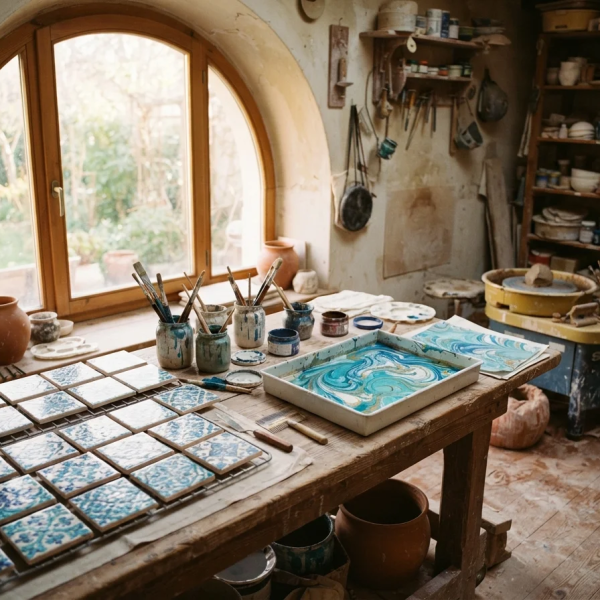
Turkish art includes crafts with long histories, such as ceramic tile painting, calligraphy, carpet weaving, miniature painting and the marbled paper known as ebru. Each craft has its own words for tools, patterns and stages of work. Some terms are best kept in Turkish with a short English explanation on first use, while others have clear equivalents. Consistency is essential, since a reader who meets two different words for one technique may think that two different techniques are being described. Photographs with captions in both languages make the explanation even clearer.
Art history, periods and names
Historical texts need extra care with periods, dynasties, places and names that changed over time. Ottoman and modern Turkish spellings may differ, and English sources may use yet another form. Choose one system, such as the modern Turkish spelling with an English gloss, and apply it throughout the project. Dates should follow one format, and centuries should be written in a consistent way. Our article on English to Romanian translation describes how a shared style sheet keeps long cultural texts consistent from the first page to the last.
Auctions, provenance and legal papers
Collectors and auction houses rely on documents that describe the origin, ownership and condition of a work. Provenance records, condition reports, export permits and certificates of authenticity are legal texts as much as art texts, and they must be translated with great precision. Names of previous owners, dates of sale and descriptions of damage or restoration should never be softened or simplified. If an export licence is needed for a cultural object, check the rules of both countries early, and keep the translated papers together with the originals.
Because those papers can decide whether a sale or an export goes ahead, auction houses usually ask for a translation that carries a signed statement of accuracy rather than an informal rendering. Collectors facing that requirement can use professional certified translation services to have provenance records, condition reports and certificates of authenticity translated and certified for the receiving authority. A certified version keeps the exact names, dates and damage descriptions intact, so the document is trusted by buyers, insurers and customs officers alike.
Websites, social media and online exhibitions
Many artists now show their work online, and the English version of a website often determines whether a curator in another country writes back. Titles of works, short biographies and image captions should be clear and complete, with the same names used on every page. For social media, short captions work best, with hashtags checked in English before use. Online exhibitions can include audio guides and videos, which need subtitles or scripts in English that match the pace of the images and leave room for silence.
Residencies, grants and applications
Residency programmes and funding bodies ask for project descriptions, budgets, portfolios and references, usually with strict word limits. A clear English application can decide the outcome, so plan time for translation, review and feedback from a native reader. Keep a master document that contains approved versions of your biography, your statement and your project summaries, and update it after every exhibition. Having these texts ready lets an artist respond quickly when an opportunity appears, and it keeps the voice steady across every application.
Where to read more
For a neutral background on one of the best known Turkish crafts, see the Wikipedia article on paper marbling, which explains the technique and its history in the Ottoman world.